This content is provided for informational purposes and does not constitute professional property acquisition advice. Consult a qualified notaire (French solicitor) and independent surveyor for any property purchase decision.
Browsing rural French property listings from abroad creates a specific challenge: how do you distinguish genuine opportunities from misleading or incomplete offers before investing thousands in viewings? International buyers consistently report discovering critical omissions only after travelling to France. The financial stakes are significant — according to the 2024 Safer Group report on rural property markets, the average countryside home now costs €195,000, representing a substantial commitment for anyone navigating an unfamiliar market remotely. Four specific listing characteristics reveal whether a seller and agent operate with professional transparency or rely on superficial marketing.
Remote property assessment presents distinct challenges for international buyers navigating an unfamiliar market. Without the ability to verify details in person before committing travel budgets, online listings become the primary filter separating genuine opportunities from incomplete or misleading offers. The rural property sector in France, particularly regions like Limousin and Dordogne, attracts steady international interest — the 2024 Safer report confirms foreign buyers represent approximately 4.9% of countryside home acquisitions. Yet this distance amplifies the importance of documentation quality in initial screening.
Four specific listing characteristics reliably distinguish professional transparency from superficial marketing. These markers are verifiable remotely, before any viewing appointment or financial commitment. Understanding what serious sellers and agents provide as standard practice allows buyers to eliminate unsuitable properties efficiently, reserving site visits exclusively for listings that demonstrate comprehensive disclosure. The following filter operates as a preliminary quality threshold.
Your 60-second listing quality filter
- Comprehensive photo galleries showing all rooms, outbuildings, and land boundaries (19-26 images minimum)
- Cadastral parcel reference number (référence cadastrale) for independent boundary verification
- Upfront mention of mandatory diagnostic reports or availability upon request (DPE, asbestos, lead, termites)
- Bilingual communication capacity with response times under 48 hours for international enquiries
Comprehensive photography: beyond the hero shot
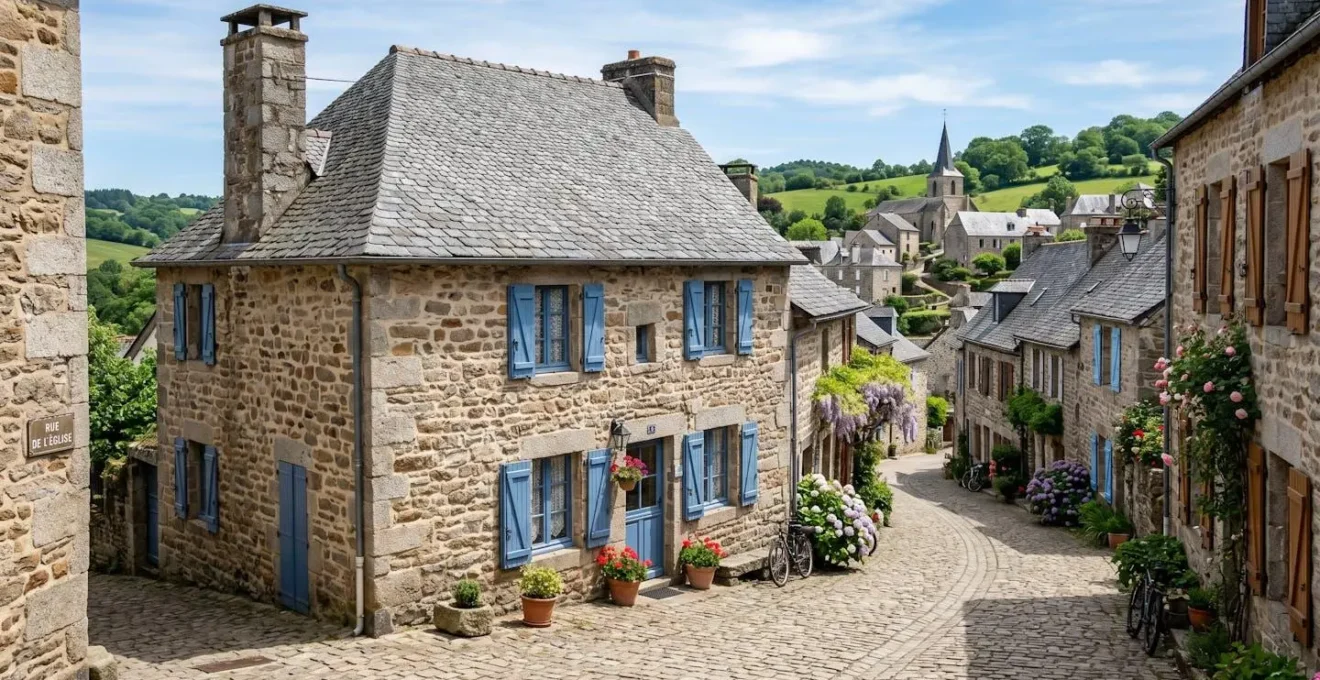
A single stunning exterior image of a sun-drenched stone façade tells prospective buyers almost nothing about the property’s actual condition. Market observations from Limousin and Dordogne reveal a consistent pattern: listings featuring fewer than 10 photos frequently omit critical details such as basement condition, roof structure, outbuilding state, or precise land extent. Professional estate agents serving international markets typically provide 19 to 26 images per property, systematically documenting every room from multiple angles, all exterior elevations, garden boundaries, and any annexes or barns.
This level of visual transparency serves a practical purpose for remote buyers. When property descriptions mention « garden » or « land attached, » comprehensive photography shows whether that means a small courtyard, a managed lawn, or several thousand square metres of meadow and woodland. Understanding the art of interior shots helps international buyers distinguish between amateur smartphone snapshots and professional documentation designed to inform rather than merely attract.

- 19-26+ images covering every room and all exterior angles
- Multiple views of outbuildings, basements, attics, and land boundaries
- Natural lighting photos without excessive editing or filters
- Consistent quality suggesting professional photography service
- Fewer than 10 photos or single attractive exterior shot only
- Heavily filtered images or strategic angles hiding defects
- Missing basement, roof space, or land extent documentation
- Stock images or photos clearly from unrelated properties
Equally revealing is what photographs exclude. Listings showing the fireplace but not the bathroom, or the front garden without rear boundaries, warrant caution. The 2024 Safer analysis notes rural land parcels average 5,200 m² (half a hectare). Descriptions of ‘generous grounds’ without boundary evidence create potential disputes upon arrival.
Transparent land and boundary documentation
Consider a scenario reported frequently by international buyers: a British couple discovered their « 2,500 m² garden » listing actually included 1,800 m² of communal woodland they could not fence or exclusively use. The description was not technically false, but the lack of cadastral precision created unrealistic expectations. This type of ambiguity damages trust and wastes both the buyer’s travel budget and the seller’s time during viewings that inevitably fail.
The boundary dispute trap: Vague land descriptions such as « approximately 3,000 m² » or « garden included » without a cadastral reference number constitute a major warning sign. Property boundary disagreements account for a significant portion of rural transaction litigation in France, often requiring expensive surveyor intervention and legal mediation to resolve. Always request the référence cadastrale and verify against official cadastre records before proceeding with any viewing or offer.
France operates a comprehensive official land registry system known as the cadastre, accessible publicly through cadastre.gouv.fr. Every property parcel receives a unique reference number (référence cadastrale) that allows buyers to verify exact boundaries, surface area, and neighbouring plot ownership independently. Reputable agencies specialising in this region, such as those offering comprehensive houses for sale in Limousin, typically include cadastral references and precise land measurements in their property descriptions, allowing prospective buyers to conduct preliminary verification remotely before investing in site visits.

The importance of this documentation becomes clearer when examining buyer demographics. The Safer 2024 report indicates that foreign purchasers represent roughly 4.9 per cent of rural property acquisitions in France, a stable proportion despite market fluctuations. For this international cohort operating across language and legal system differences, the cadastre provides an objective, verifiable foundation that transcends potential miscommunication. Listings that reference specific parcel numbers and include cadastral extracts demonstrate a commitment to transparency that protects both parties.
SAFER, the French agricultural land regulation body, maintains pre-emption rights on certain rural transactions. Though primarily affecting farmland rather than residential homes, competent agents understand whether a property falls within SAFER’s remit. This knowledge signals professional expertise rather than opportunistic flipping.
Upfront diagnostic and compliance disclosure
A Dutch investor recently shared an experience that illustrates the financial consequences of incomplete disclosure: after agreeing terms on a renovation project in Haute-Vienne, the mandatory asbestos survey revealed extensive contamination throughout the roof structure. The resulting remediation added approximately €22,000 to the budget — a cost that could have informed the initial negotiation had the diagnostic been available earlier. This scenario repeats itself across rural property transactions when sellers or agents treat mandatory reports as administrative formalities rather than essential buyer information.
French law requires vendors to compile a comprehensive Dossier de Diagnostic Technique (DDT) containing multiple safety and performance assessments. According to Service-Public.fr’s detailed guidance on the legal obligation, this dossier must be provided to buyers before signing any preliminary sale agreement (compromis de vente). For rural houses, the DDT typically includes energy performance certification (DPE), asbestos surveys for buildings with permits issued before July 1997, lead paint assessments for pre-1949 construction, termite inspections in designated risk zones, electrical and gas safety certificates for installations over 15 years old, and natural/technological risk reports specific to the property’s location.
The energy performance diagnostic (DPE) has particular relevance given recent regulatory changes. As the French Ministry of Economy specifies in its official guidance, the DPE calculation methodology was updated from January 2026, improving ratings for certain electrically heated properties through revised conversion coefficients. The DPE is legally opposable — diagnosticians assume liability for accuracy. Valid certificates display a 13-character ADEME reference number. Properties lacking verified documentation signal administrative negligence or concealment.
- DPE (Diagnostic de Performance Énergétique) with valid ADEME reference number
- Asbestos survey (état d’amiante) if building permit issued before 1 July 1997
- Lead paint assessment (CREP) for properties constructed before 1 January 1949
- Termite inspection (état parasitaire) if property located in designated risk zone
- Electrical safety certificate if installation exceeds 15 years
- Gas safety certificate if gas supply present and installation over 15 years old
- Natural and technological risk report (État des Risques et Pollutions)
Professional agents operating with transparency do not wait for buyers to request these documents. Serious listings either summarise key diagnostic findings in the property description or explicitly state that reports are available immediately upon enquiry. Reluctance to provide diagnostics, vague promises that « these will be done before completion, » or dismissive responses suggesting these are unimportant formalities all indicate an agent or seller unprepared for professional transaction standards.
Responsive and bilingual communication standards
A persistent assumption in cross-border property acquisition holds that international buyers must adapt entirely to local language and business practices. This perspective places the burden of accommodation solely on the purchaser, who already navigates unfamiliar legal systems, currency considerations, and remote decision-making challenges. In practice, this assumption reveals which agents genuinely serve international markets versus those treating foreign enquiries as occasional windfalls requiring minimal effort.
Response time provides the first indicator. Professional agencies acknowledge enquiries within 24-48 hours, even when comprehensive answers require document preparation. Silence beyond four working days, particularly when initial contact indicates foreign location, suggests inadequate infrastructure or motivation for international clients.
Language accommodation represents the second critical marker. Limousin and Dordogne have attracted British, Dutch, Belgian, and other European buyers for decades — this is not a new or unexpected market segment. Reputable agencies serving these regions employ bilingual staff or maintain partnerships with qualified translators, providing property descriptions, diagnostic summaries, and contractual explanations in English alongside French originals. This is not merely courtesy; it constitutes professional risk management. Misunderstandings arising from language barriers during property transactions create legal exposure for all parties, making clear communication a commercial necessity rather than optional client service.
The practical test is straightforward: send initial enquiries in English (or your native language) and evaluate both the speed and quality of response. Do replies arrive in competent English, or through obvious machine translation requiring constant clarification? Does the agent proactively offer translated versions of key documents, or insist you arrange translation independently? Are questions answered directly, or deflected with generic marketing language? Once you have shortlisted properties using these remote screening criteria, prepare for your viewing trip by reviewing professional criteria for property inspections to strengthen your on-site assessment.
Your 4-signal serious listing checklist
- Verify photo count exceeds 19 images with comprehensive room, land, and outbuilding coverage
- Request cadastral parcel reference (référence cadastrale) in your first contact and cross-check via cadastre.gouv.fr
- Ask for diagnostic report summaries (DPE, asbestos, lead, termites) before scheduling any viewing
- Test communication quality by sending English-language enquiries and measuring response time and clarity